In East and Southeast Asia, practitioners who are working toward gender justice have formed a new capacity development initiative called the The Regional Learning Community (RLC) for Transforming Masculinities and Gendered Power Relations to Promote Gender Justice for East and Southeast Asia (ESEA). This regional initiative is taking a collective approach to knowledge creation and skills building for the primary prevention of gender-based violence and the promotion of gender justice in the region.
The Regional Learning Community have put steps in place to generate and share their knowledge through a series of community learning processes, including trainings, networking, and partnerships. The knowledge generated through this initiative is being organised under a regional curriculum that is developed by and for practitioners, activists, advocates, experts, researchers, individuals and organisations from the region.
The RLC has recently launched a community online...
Over 30 people from seven countries in Asia and the Pacific came together recently to develop effective and sustainable strategies to communicate findings from The Change Project in their advocacy, public awareness, community and programming activities.
The Change Project is coordinated by Partners for Prevention, a UNDP, UNFPA, UN Women and UNV regional programme for Asia and the Pacific. It aims to consolidate a pioneering body of research on masculinities and their connections to violence against women to inform evidence-based responses to violence prevention.
The meeting took place October 31-November 2 in Colombo, Sri Lanka, and brought together representatives from the UN, civil society, academia, and researchers from Bangladesh, Cambodia, China, Indonesia, Papua New Guinea, Sri Lanka, Viet Nam; leading researchers from key international GBV research projects including IMAGES, the WHO Multi-Country Study on Violence against Women and the Medical Research...
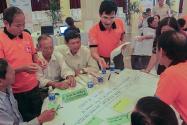
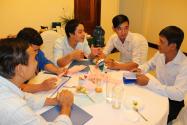
Partners for Prevention, the UNDP, UNFPA, UN Women & UNV Regional Joint Programme for Asia and the Pacific on the Prevention of Gender-based Violence, convened in Vientiane, Laos, a four-day workshop on Transforming Masculinities and Gendered Power Relations to Promote Gender Justice.
As an integral part of P4P’s Capacity Development strategy to develop a sustained resource pool of skilled resource people/mentors and to enhance in-country programming, P4P supported the Regional Learning Community (RLC) for East & Southeast Asia to develop regional curricula on the transformation of masculinities and gender power relations to promote gender justice. P4P is contributing to (sub) national demands by strengthening organizational and individual capacities of its partners needed for designing and reforming policies, influencing programming and supporting advocacy and awareness through this collective learning process.
Thirty civil society organization (CSO)...
The United Nations Secretary-General's UNiTE campaign has launched a T-Shirt Design Competition and are inviting young men ages 18 – 25 years old to use their imagination to prevent and end all forms of violence against women and girls and embody the concepts of equality, non-discrimination and respect in their designs. Five winners selected by twenty nine regional and five global judges, and one winner chosen by the Public Vote, will travel to New York to participate in the UN official observance of the International Day for the Elimination of Violence against Women, which will take place on 22 November this year at UN Headquarters. For more information, see:http://unitetshirtcompetition.org/en/home
The Regional Learning Community (RLC) for Transforming Masculinities to Promote Gender Justice calls for applications from organisations and individuals in East and Southeast Asia committed to gender justice promotion and/or gender-based violence prevention to participate in a workshop to build critical consciousness, critical thinking capacity, knowledge and analytical capacity on Foundational Knowledge surrounding gender and power relations, gender justice and masculinities. The workshop will be held in Vientiane, Laos, from 24 – 27 October 2011.
To apply, see: http://www.engagingmen.net/node/3779
The workshop on the Foundational Knowledge section will comprise the following themes/topics:
1. Genders, power and injustice
2. Sexualities, power and injustice
3. Social and economic forces and inequalities
4. Spectrum of...
Deadline for applications: 28 September 2011
Date and Venue: 3-5 November 2011 in Colombo, Sri Lanka
Partners for Prevention is accepting applications from practitioners from the Asia-Pacific region to participate in a regional workshop aiming at building practical skills for those implementing, planning or considering primary prevention projects/programmes.The workshop will also be an opportunity to network and share experiences from projects and initiatives focused on primary prevention of gender-based violence from the Asia and Pacific region.
Partners for Prevention is drawing upon resource people with extensive experiences and expertise in primary prevention of gender-based violence, prevention programming, and gender-based violence research. All participants will be planning or implementing a primary prevention project or strategy.
Participants will share knowledge and skills to:
•Design and coordinate primary prevention projects based...
Gender experts believe that education on violence prevention in Viet Nam should begin in schools but the subject was not in the curriculum and the topic was unfamiliar to most teachers.
"School-based violence prevention is very important, to teach young people before they get in a relationship or start to learn to use violence against each other," said Partners for Prevention Programme co-ordinator James Lang.
Speaking on the sideline of a workshop reviewing strategies and tools for school-based prevention in Ha Noi yesterday, Lang said nations should focus on helping young people understand their options in relationships and within families.
This would promote a more harmonious and violence-free society, he said.
He cited the results of last year's study on domestic violence against women in Viet Nam as a sorry fact.
The survey found that one in three or 34 per cent of married women had suffered physical or sexual violence from their husbands at...
The Model UN session on the constructive dialogue between the CEDAW committee and Chinese delegation was held in Beijing Normal University on May 28th. 30 student representatives from 10 first tier universities from Beijing and Shanghai participated in the activity. 5 students represented the CEDAW Committee members and the rest acted as Chinese delegates from 10 ministries of Chinese government.
As part of the project on ‘Engaging Young Men through Social Media for the Prevention of Violence against Women’, this offline activity enhanced gender awareness and the understanding of CEDAW among young people. Before the model session, student participants studied CEDAW convention and researched current gender issues in China and produced a comprehensive report on the progress the Chinese government has made in improving gender equality and the existing problems and challenges. During the model session, participants discussed the status-quo of gender equality including violence...
A quantitative survey aimed at deepening understanding of men’s attitudes and behaviours regarding VAW and its prevention has recently been completed in one urban and one rural site in China.
The survey findings will help inform future policy and programmes, and potentially serve as a baseline to monitor campaigns and initiatives to address men and boys’ attitudes and behaviours towards masculinity, gender equality, sexuality and VAW.
The survey was undertaken by a research team in China in collaboration with UNFPA China, and with support from the All China Women’s Federation. The survey methodology was based on the Partners for Prevention regional GBV Prevention and Masculinities Research Project and adapted to the Chinese context. Men and women ages 18 to 49 years, who were randomly selected as a representative sample in the study sites, were interviewed. The sample size for the quantitative study was 1500 men and 1500 women.
From 4-10 May, a training...
A group of young NGO activists from South Asia recently took part in an 18-day study programme in Nepal aimed at developing understanding on the political, social and cultural aspects of masculinities in relation to gender justice. The study programme was conducted by the South Asian Network to Address Masculinities (SANAM), with support from Partners for Prevention, and is part of SANAM’s Capacity Development Initiative in South Asia project.
The study programme was conducted 1-18 February in Nepal. Thirty people from various backgrounds of work and research on issues related to gender equality and masculinities from four countries in South Asia (Bangladesh, India, Nepal, Pakistan), along with one each from Sri Lanka, Indonesia and Philippines (totaling 33) participated in the study programme. Prominent experts from South Asia took part as resource persons.
The study programme used a training curriculum developed by SANAM that explores seven sub-themes: Conflict...
In East and Southeast Asia (ESEA), practitioners who are working toward gender justice are building a new capacity development initiative called the Regional Learning Community. This regional initiative seeks to develop a collective approach to knowledge creation and skills building for the primary prevention of violence against women (VAW) and the promotion of gender justice in the region.
The Regional Learning Community process aims to inspire and support national actions to contribute to long-term social change for gender justice and violence prevention. This group of practitioners have put steps in place to generate and share their knowledge through a series of community learning processes, including trainings, networking, and partnerships. The knowledge generated through this initiative is being organised under a regional curriculum that will be in the form of a web-based wiki. The regional curriculum is being developed by and for practitioners, activists, advocates,...
Must Bol is a call to young people to examine violence in their lives and speak out against it. The campaign is targeting youth in Delhi who are active and potential social media users, and uses creative media to generate thought-provoking discussions on gender and violence. The campaign has taken up issues of relevance to the inner circle of young people’s lives - self, body, family, peers, intimate relationships and workplace.
'In our engagement with young people we have witnessed how gender affects so many aspects of young people's lives and yet remains largely unquestioned. Violence emerging from gender goes largely unrecognized and routinised in many ways and even celebrated at times. There is great need for intervention and support, for placing gender in perspective and creating avenues for dialogue and discussion,' said Rama Rao, the facilitator of CYC’s Youth led Campaign. 'What is happening through this campaign is frank and open sharing of experiences and...
Partners for Prevention is supporting a practitioners’ Learning Community in East and SE Asia. The Learning Community aims to share knowledge across the region to promote gender justice and end violence against women. The Learning Community will collectively design a regional curriculum and implement trainings and will take a critical approach to both knowledge creation and leadership training. Please see the one page description at:
http://partners4prevention.org/files/documents/one_pager_-_rlc_esea_20_j...
To support this process, we are seeking a number of practitioners and/or academics from the region to contribute to a regional curriculum by helping to shape content and training modules on the following topics :
1. Feminism & Human Rights Based Approaches:...
Engagingmen.net has launched the first issue of its community e-magazine, "16 Days of Activism: Our Collective Action". The e-magazine is available at www.engagingmen.net/e-magazine-issue-1 .
The e-magazine includes news, photos and video highlights of campaign activities conducted by Engagingmen.net members from around the globe, including community outreach activities, policy and advocacy campaigns, social media activism and youth mobilisation initiatives. The campaign activities highlighted in the e-magazine took place during the 2010 16 Days of Activism, between 25 November and 10 December. These events called for the elimination of all forms of violence against women, including the importance of involving men in the prevention of violence against women.
The Engagingmen.net (EMN) Community E-magazine series is designed as a forum for EMN members to reflect on...
From the 23rd – 25th of March 2011, Partners for Prevention hosted the 2nd Asia-Pacific Regional Research Meeting for the Gender-based Violence Prevention and Masculinities Research Project in Bangkok. Thirty participants from Bangladesh, Cambodia, China, Papua New Guinea, Indonesia, Sri Lanka and Vietnam, representing research institutes, civil society, government, UN partners as well as members of the project’s Regional Steering Committee and Technical Advisory Group took part in three days of active discussion and planning.
Country teams presented on their progress so far and shared lessons they have learned along the way. Claudia Garcia-Moreno (WHO) and Gary Barker (Instituto Promundo) also shared their invaluable experiences from the WHO Multi-country Study and IMAGES, respectively. Rachel Jewkes (Medical Research Council) and Emma Fulu (P4P) provided training to participants on both quantitative and qualitative data analysis and research dissemination. Report...
James Lang, Coordinator of Partners for Prevention, gave a seminar at UNDP Headquarters to discuss the successes and challenges of the UNDP, UNFPA, UN Women and UNV regional joint program that includes the core strategy of working with boys and men to prevent violence against women in Asia and the Pacific.
The event was made accessible within the UN family as well as to the public in real time via www.ustream.tv. Participants logged in from Antigua, Canada, Mexico, Pakistan, Guyana, and Fiji, and were able to post questions and hear the responses to them.
To watch the video, see: (http://www.engagingmen.net/video/sysop/2011/01/presentation...
SIDA, the Swedish International Development Cooperation Agency, recognizes that gender equality is both a goal in itself as well as a prerequisite for long-term democratic development and equitable and sustainable global development.
To promote gender equality, greater influence of women and greater respect for women’s rights in Asia and the Pacific, SIDA/Sweden announces its support of the Partners for Prevention programme for three years (2011-2013) of 9 million Swedish crowns (~US$1,320,000).
SIDA’s policy to promote gender equality and the rights and role of women is focusing its efforts primarily on four areas: women’s political participation and influence; women’s economic empowerment and working conditions; sexual and reproductive health and rights; and women’s security, including combating all forms of gender-based violence and human trafficking. In addition, SIDA recognizes that GBV is also perpetrated against boys and men, and that boys and men are...
Activists and practitioners working for gender justice and violence prevention in East and Southeast Asia and the Pacific met in Bangkok recently to outline a collective approach for knowledge creation and sharing across the region.
“By pulling together regionally and developing a body of knowledge and strategies for action that is pertinent to the experiences of our countries, we will strengthen and inspire our work and ultimately empower ourselves and those we work with” said Undarya Tumursukh, the National Coordinator of Mongolia Feminist Network.
“Our work is about transforming communities, attitudes, and behaviors on masculinities as a way to prevent gender-based violence,” said Nur Hasyim, Coordinator of the Men’s Programme of Rifka Annisa in Indonesia, “It is important to collectively improve our understanding, perspective, skills, and strategy on how to challenge masculinities and patriarchies.”
Participants outlined the plan to develop a regional...
Let’s Talk Men 2.0 is a new film series aimed at drawing boys and men into discussions on gender and violence prevention and encouraging their active participation in building a more gender equitable South Asia.
The new series is based on four films on masculinities that were made in Bangladesh, India, Nepal and Pakistan in 1998 with the support of UNICEF’s Regional Office for South Asia and Save the Children (UK).
The first regional project of its kind, the series catalyzed a discussion on masculinities and kick-started wide spread engagement on the importance of developing interventions with boys and men on gender issues and specifically on gender-based violence.
The four films made under the previous project (When Four Friends Meet (India), Our Boys (Bangladesh), Listen To The Wind (Nepal), Now That Is More Like A Man (Pakistan)) have been utilized extensively in the last decade for trainings, advocacy and discussion by almost every group working on gender...
Partners for Prevention, in collaboration with the Asian Forum of Parliamentarians on Population and Development (AFPPD) is conducting research aimed at exploring the challenges Parliamentarian’s face in moving prevention policy forward, and developing a deeper understanding of how they can be supported in the key roles they can play in GBV prevention in their countries.
P4P recently interviewed MPs at the Regional Women Ministers’ and Parliamentarians Conference, “Review of Parliamentarians’ Actions and Legislations on the Elimination of Violence against Women,” on 21 -22 October , in Yogyakarta, Indonesia. At the conference, Partners for Prevention also gave a presentation about how to engage boys and men in the prevention of violence against women in the session “Men in Action on Elimination of Violence against Women and Girls”. Over 90 parliamentarians from 19 Asia-Pacific countries participated in the conference. The conference was organized by AFPPD in cooperation with...
Partners for Prevention and Demand Media, Inc., an online media company with expertise in developing social media platforms and campaigns, are working together in Asia and the Pacific to implement social media campaigns to raise awareness and promote action to prevent violence against women and girls.
Demand Media is providing pro bono support to the Partners for Prevention project, “Engaging Young Men through Social Media for the Prevention of Violence against Women,” which aims to connect and inspire young people to take action to end gender-based violence. The project will be carried out in China, Indonesia, India and Viet Nam over the next 15 months.
Demand Media has provided training for the groups in China, Indonesia and India that are carrying out the social media campaigns, including exploring effective social media tools and how they can be used creatively to reach out to boys and men to take action to prevent violence against women.
A team of...
Prevailing views on manhood in Cambodia are similar to those found in communities around the world: men are expected to be dominant over women and the main breadwinners within the household. According to a recent study conducted by Gender and Development for Cambodia (GADC), some men also believe that men can use violence against women when their gendered roles are challenged.
The study - Deoum Troung Pram Hath in Modern Cambodia: A Qualitative Exploration of Gender Norms, Masculinity and Domestic Violence – examines the links between masculinity, gender, and domestic violence and aims to help identify effective means of preventing violence against women and children. The study was conducted with support from Partners for Prevention, the International Centre for Research on Women with additional funding from the UN Trust Fund for Ending Violence against Women.
A dominant view held by the respondents is that violence committed by men at home is seen less negatively...
“Agents for women”, the male refugees whispered, as they observed male staff from the International Rescue Committee’s (IRC) Gender-based Violence Programme go about their activities in the community. Other men, on being encouraged to share housework responsibilities, agreed, “They are not real men”.
When programming to addresses violence against women is introduced into a community it often takes time for community members, especially men, to understand and accept it. Starting IRC’s program in the refugee camps for ethnic Karenni from Burma was no exception.
But the reality was that the camp was rife with problems of domestic violence. Frustration from being holed up in the camp for years, unemployment and alcohol abuse, among others --- often implode nightly in the small bamboo houses. But, “you don’t hear anything”, Ko Noung says quietly. A volunteer for the GBV programme and a refugee himself, he continues, “You only know something [bad] has happened when you...
The South Asian Network to Address Masculinities (SANAM) has developed a curriculum for practitioners in South Asia to foster commitment to work with boys and men to challenge gender-based inequalities and violence. The curriculum promotes a reflective mode of thinking that enables boys and men to challenge their own attitudes and behaviour patterns at an individual level – and then to apply their skills and passion to help inspire changes within communities and organizations.
SANAM consists of academics, practitioners, trainers and activists from around South Asia with diverse experience and expertise on masculinities and gender. SANAM has developed innovative strategies for deepening knowledge and inspiring change including an 18 day emersion in the curriculum and a mentorship plan to match experienced members with young practitioners who will be engaged throughout 2011 in implementing new activities in their local environment.
The curriculum includes a focus on...
A joint media release from Australia’s Minister for Foreign Affairs, The Hon Kevin Rudd MP and Minister for the Status of Women, The Hon Kate Ellis MP.
Australia is a strong supporter of White Ribbon Day, the International Day for the Elimination of Violence Against Women.
Foreign Minister Kevin Rudd and the Minister for the Status of Women, Kate Ellis, today announced $1 million over the next four years to support Partners for Prevention in its work with men across Asia and the Pacific to end violence against women.
Mr Rudd said Partners for Prevention is an innovative joint United Nations program that involves governments, civil society and United Nations agencies working together to change attitudes and prevent violence.
"This investment will help develop research and training materials on gender based violence to support governments and other organisations in their work from Bangladesh to Vietnam," Mr Rudd said.
"As a White Ribbon...
Partners for Prevention recently launched Engagingmen.net, a new practitioners' portal for people around the world who are interested in engaging boys and men in gender justice. As of December 2010, around 600 individuals from around the world have become members of the web based portal. Members come from diverse backgrounds but share common interest in issues including women's empowerment, the prevention of violence against women, stopping the spread of HIV/AIDS, promoting responsible fatherhood and healthy relationships, and more.
This interactive site aims to help practitioners develop and expand their knowledge on involving boys and men in supporting women’s empowerment and ending violence against women. The site includes a large online library of resources on gender justice, including toolkits, training manuals and research reports. It also provides special pages and topical groups to help practitioners connect with others in their region or field of interest. Members...
In Aceh, Partners for Prevention and the local UNIFEM office are supporting research that seeks to create a deeper understanding of the social structures, norms, attitudes and behaviours that contribute to violence against women. The research will provide a better understanding of healthy and equitable ways manhood can be defined in the Acehnese context, and how men can become partners for violence prevention. In addition, there is very little accurate data on the prevalence, causes and consequences of violence in Aceh. Thus this project aims to address this gap and help inform policy and programs to more effectively prevent violence against women.
The research is set in a rapidly changing context, and will shed light on how Aceh’s particular circumstance has impacted on shaping particular notions of masculinity, and how certain gender norms contribute to men’s use of violence. The project also aims to understand the ways in which armed conflict is both a product of and...
NGOs and communications experts met in Bangkok recently to explore the latest cutting edge platforms, tools and theories on using social media for social change. Seventeen participants from India, China, and Indonesia took part in the meeting, along with representatives from UNIFEM and Demand Media, a leading online media company and expert in developing social media platforms.
The meeting brought together the three organizations that are part of Partners for Prevention’s “Engaging Young Men through Social Media for the Prevention of Violence against Women” project, which aims to connect and inspire young people to take action to end violence against women and will be carried out in China, Indonesia, and India.
With the support of a leading expert on social media from Demand Media, participants explored the key principles of a social media campaign, the most effective social media tools available and how they can be used creatively to reach out to boys and men to...
The first phase of a five-year communications campaign for the prevention of domestic violence was jointly launched recently in Phnom Penh, Cambodia by the Ministry of Women’s Affairs in Cambodia, GTZ, the Spanish Agency for International Development Cooperation (AECID) and Paz y Desarrollo, along with Partners for Prevention and Gender and Development for Cambodia (GAD/C). More than 90 representatives from Government, NGOs and the UN in Cambodia attended the event.
The national Joint Communications Campaign (JCC) aims to increase awareness on the prevention of domestic violence and change attitudes and behaviours of boys and men in Cambodia, inviting them to engage and take positive actions towards the issue.
In order to strengthen the campaign, recent research conducted in Cambodia is being used to inform the campaign and increase the effectiveness of the project. The research is providing vital information that sheds light on the target audience by mapping out the...
What do masculinities have to do with gender-based violence? This is the question that brought together representatives from civil society, academic, research institutes and UN agencies from across the Asia-Pacific region last week to launch Partners for Prevention’s ground-breaking Gender-based Violence and Masculinities Research Project. The three-year project will enhance our understanding of the underlying causes of gender-based violence, build local and regional knowledge on how to engage men and boys to prevent violence, and lay a foundation to inspire future research on a global scale.
“We’ve come together to jump-start a body of research that will leave a legacy for gender justice in the region,” says P4P project coordinator James Lang. “This collective endeavor is building alliances between researchers, civil society, government and UN partners to catalyze innovation and guide our understanding gender-based violence prevention to new levels.”
The program’s “...
Partners for Prevention is accepting applications from practitioners from the Asia-Pacific region to participate in a regional workshop aiming at building practical skills for those implementing, planning or considering primary prevention projects/programmes. The workshop will also be an opportunity to network and share experiences from projects and initiatives focused on primary prevention of gender-based violence from the Asia and Pacific region. Partners for Prevention is drawing upon resource people with extensive experiences and expertise in primary prevention of gender-based violence, prevention programming, and gender-based violence research.
To apply, see:
http://www.partners4prevention.org/node/135
Participants will share knowledge and skills to:
Design and coordinate primary prevention projects based on evidence and promising practices...